28 November 2025

Risk management on the range: What insurance can (and can't) cover

By Guncover
A yellow and black shooting target with multiple bullet holes clustered near the center and a few outside the rings.

Operating a shooting range comes with unique responsibilities. Beyond providing a safe and enjoyable environment for members and visitors, range owners must also manage risks that could impact their business, reputation, and financial stability. Insurance plays a vital role in this – but it’s important to understand both what it covers and where its limits lie.

What insurance can cover

  1. Public Liability: If a visitor or member is injured on your premises, public liability insurance can protect against claims for compensation and legal costs. This is one of the most critical covers for any range.
  2. Employers’ Liability: For ranges with staff, this is a legal requirement. It covers claims if employees suffer injury or illness in the course of their work.
  3. Property and equipment: Buildings, target systems, protective barriers, and other assets can be insured against fire, theft, or accidental damage. Specialist cover can also extend to firearms and ammunition stored on-site.
  4. Business Interruption: If your range is forced to close due to an insured event – such as fire or flood – business interruption insurance can help cover lost income and keep your operations afloat.
  5. Specialist cover: Policies can be tailored to include event insurance for competitions, cyber cover for online booking systems, and trustee indemnity for committee-led clubs.

What insurance can’t cover

Insurance is not a substitute for strong risk management. There are areas where cover may be limited or excluded:

  • Negligence in safety protocols: If accidents occur due to poor supervision or ignored safety rules, insurers may challenge claims
  • Unlicensed or illegal activity: Any breach of firearms legislation or licensing requirements is outside the scope of cover
  • Wear and tear: Routine maintenance issues, such as worn-out equipment, are not insurable
  • Reputational damage: Insurance can’t repair trust lost through poor practices – it only addresses financial risk

Building a safer range

The best risk management strategy combines robust safety procedures with appropriate insurance cover. Regular staff training, clear signage, equipment checks, and compliance with firearms regulations all reduce the likelihood of claims.

Protecting your business with Guncover

By insuring with Guncover, you gain specialist protection designed for shooting ranges and the wider firearms industry. Our tailored policies safeguard your business against the unexpected, so you can focus on running a safe, successful range for your members and community.

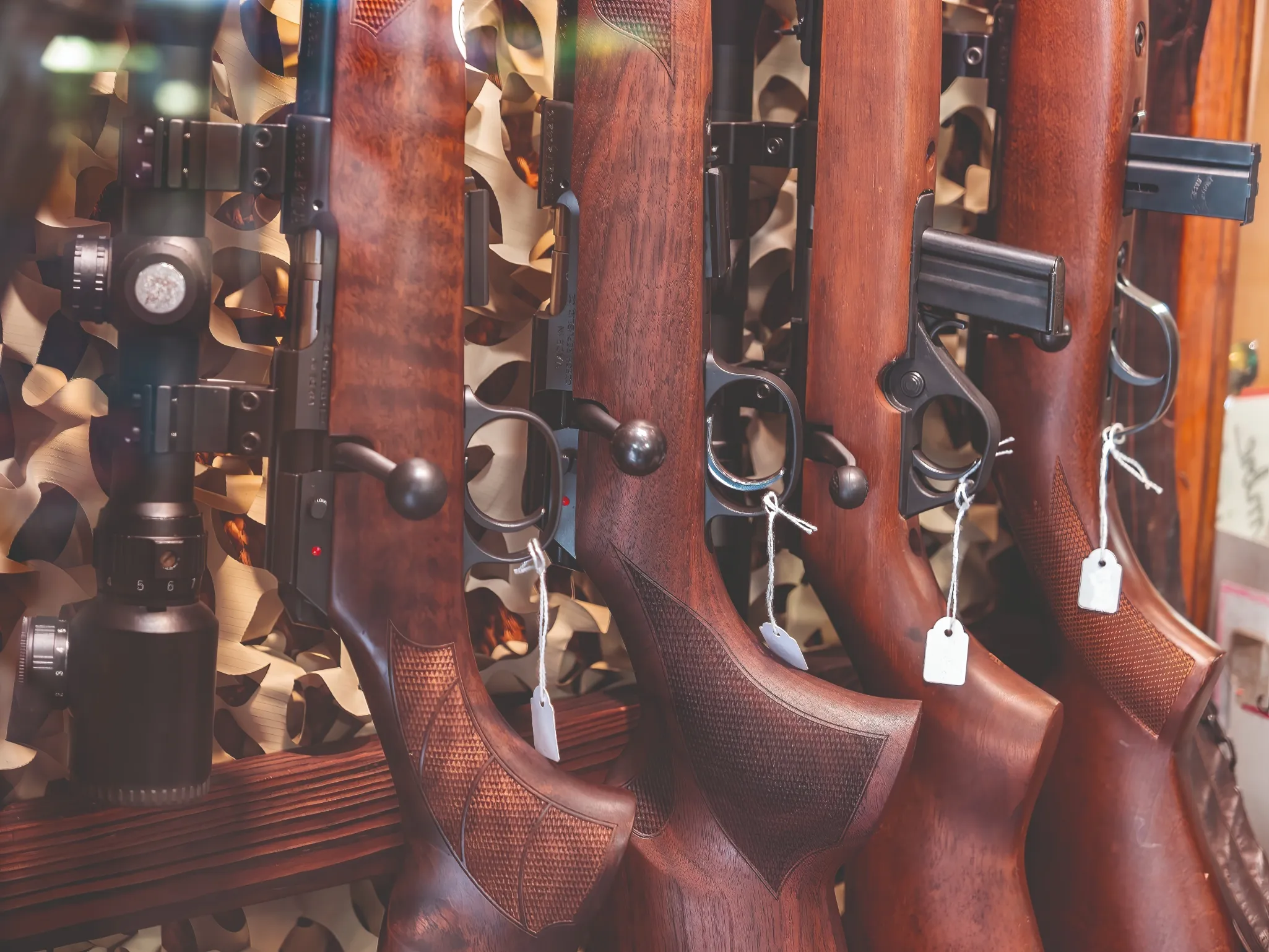
A row of rifles with wooden stocks displayed for sale, each with a price tag attached, set against a camouflage-patterned background.